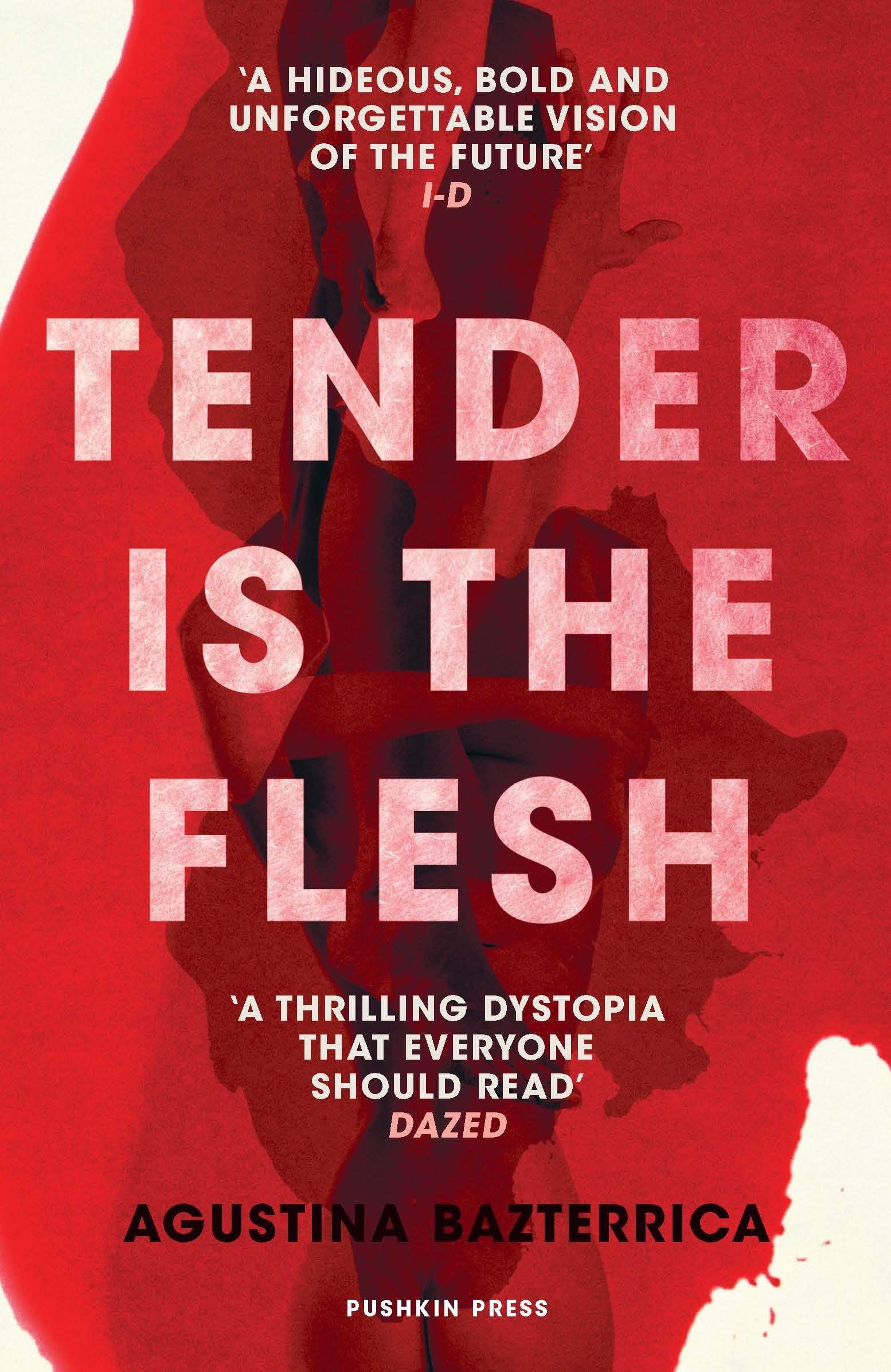
Author: Augustina Bazterrica
Translator: Sarah Moses
Published: 2017
Target audience: Adults 18+
Hypocrisy, atrocity, and the banality of evil. This is ‘Tender is the Flesh’, an award-winning dystopian novel set in a future where cannibalism is naturalised. Originally published as ‘Cadáver exquisito’ by Argentinian author Augusta Bazterrica and translated into over twenty languages, the story takes place a few years from now where animals can no longer be eaten due to being infected with a deadly virus. In order to supply the demand for meat, governments approve industries to breed humans as animals for consumption.
'Tender is the Flesh’ is told from the perspective of a man who is numb, revolted, grieving, and knowingly complicit. Originally trained to deal with pigs and cows at a meat processing plant, Marcos’ skills were in high demand following the transition to ‘special meat.’ The writing style is both intimately revealing and fascinatingly distant. It uses a Close Third Person point of view, but the protagonist is only ever referred to as ‘he’ in prose, consequently positing our main character as someone in a permanent dissociative state. Marcos wants out, but does not have any other skills and needs the income to support his ailing father. He’s aware of his hypocrisy that while he is used to his daily work of slaughtering and butchering humans, he can’t get over the death of his own child.
A curious aspect of this book is that there is not a clear driving plot line. Instead, ‘Tender is the Flesh’ is an unflinching exploration of the changed everyday life and social mores of a world assimilated to cannibalism. The novel uses dehumanising, distancing language to cement the different between humans who are people, and the ‘meat’ that is bred for consumption. Those to be slaughtered are referred to as “heads”, “merchandise”, “a female”, “this male”, “custom-raised meat”, and more. Butchers market parts as “Upper Extremity” or “Lower Extremity” to be more socially palatable than saying ‘hands’ or ‘feet’. Cremation has become the standard burial procedure to avoid your loved ones being exhumed and sold on the black market.
The casual warping of laws and morality is rife throughout this book, and not just in relation to cannibalism. There is also sexual assault, animal cruelty, the insistence that slavery is still illegal and barbaric. However, since the specially-bred ‘heads’ are not people, they cannot be slaves, and thus no transgression is considered to exist. While serving a dinner of lemon and herb ‘special kidneys’, Marcos’ sister scolds her children for joking about what he might taste like, shouting “I’ve had it with this game. We don’t eat people. Or are the two of you savages?” Through blatant contradictions and hypocrisy, ‘Tender is the Flesh’ offers an engrossing story of class, propaganda, and the willingness of the general populace to follow whatever norms are imposed. It is a deliberately uncomfortable read, and yet as readers we cannot deny the mirror it holds to real life.
The most horrifying part of ‘Tender is the Flesh’ is that the dystopian hypotheticals presented are completely in line with human nature and the everyday perversions and hypocrisies of the societies we live in. There is nothing surprising or inconceivable about humanity as depicted in this book, merely the literary elegance with which the author has given it form. ‘Tender is the Flesh’ most deservedly won both the 2017 Clarín Novel Prize and the Ladies of Horror Fiction award for Best Novel.
It feels strange to recommend a book on the basis that it is disturbing, a monstrosity you cannot look away from. I wanted it to end and absolutely couldn’t put the book down. It cannot be described as enjoyable, but it is certainly engaging and masterfully written. If you are looking for a twisted examination of the human race, ‘Tender is the Flesh’ awaits you.
Excerpt:
He always asked himself what it would be like to spend most of the day storing human hearts in a box. What do the workers think about? Are they aware that what they hold in their hands was beating just moments ago? Do they care? Then he thinks that he actually spends most of his life supervising a group of people who, following his orders, slit the throats, gut and cut up women and men as if doing so were completely natural. One can get used to almost anything, except the death of a child.
How many heads do they have to kill each month so he can pay for his father’s nursing home? How many humans do they have to slaughter for him to forget how he laid Leo down in his cot, tucked him in, sang him a lullaby, and the next day saw that he had died in his sleep? How many hearts needed to be stored in boxes for the pain to be transformed into something else? But the pain, he intuits, is the only thing that keeps him breathing,
Without the sadness, he has nothing left.
