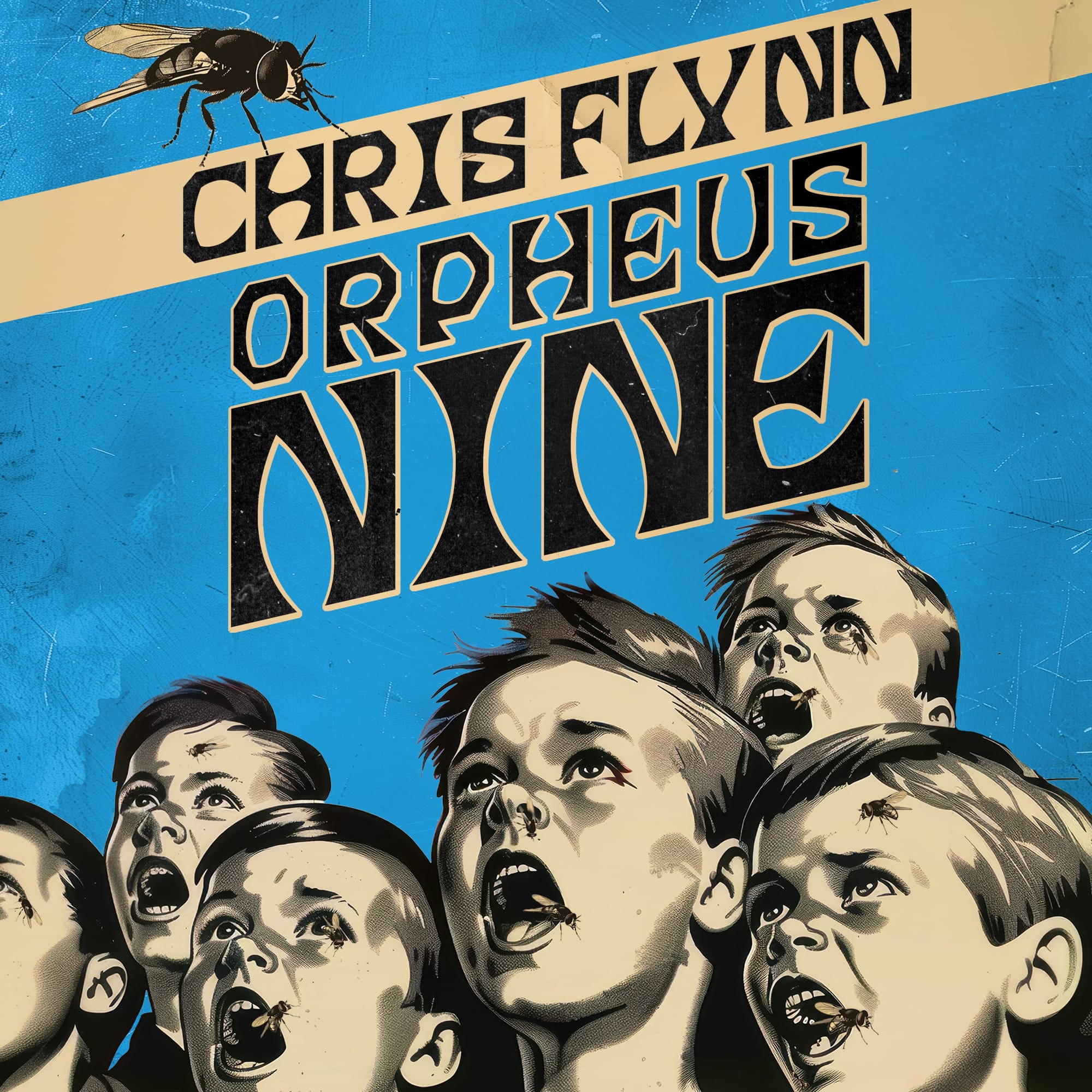
Author: Chris Flynn
Published: 2025
Target audience: Adults (appropriate 16+)
Is this the end of days, or the start of something new?
‘Orpheus Nine’ is remarkable novel that follows the lives of three families in a small Australian town struggling to cope in the aftermath of a mysterious global phenomenon that claims the lives of every nine-year-old in the world. Written by Australian author Chris Flynn of ‘Mammoth’ acclaim, this speculative fiction tale asks when faced with inescapable adversity, how do we as individuals and communities respond?
The story takes place in 2023, in the immediate post-Covid-19 era where everyone is still recovering from the societal upset and temporal dislocation of the pandemic. Flynn skilfully draws on parallels to the Covid-19 experience to infuses ‘Orpheus Nine’ with a grounded believability, particularly with the rise of conspiracy theories and dogmatic wellness ideologies in reaction to uncontrollable events. Flynn weaves an enthralling tale that is raw and riddled with desperate non-acceptance. The novel’s ongoing horror of children dying becomes known as Orpheus Nine and bereft parents are cruelly labeled Orpheans. Some people fracture, and others come together. Some see no choice but to radicalise, while others focus on the future to avoid the intolerable present.
Despite the unstoppable devastation of Orpheus Nine occurring globally, the story is primarily told from the perspective of three couples in a small Australian town called Gattan. There is Jess and Steve, whose son died in the first wave of Orpheus Nine and become subsumed by grief; Dirk and Lucy, whose son had only just turned ten days earlier and was spared, their relief turning to superiority and opportunistic profiteering; and Hayley and Jude, whose daughter is eight and running out of time. Connected by adolescent friendship and and splintered adult connections, these parents each attempt to fight the unfathomable in their own way. But the clock keeps ticking…
Readers see glimpses of the fallout on a global scale. Governments scramble for answers as rumours run amok and vital supply chains collapse. Grieving parents riot in Pakistan, and mothers in the USA are arrested for demanding answers and locked in asylum-like ‘Orpheanages’. Online forums explode with theories of chemical weapons and supernatural means, while social media witnesses the rise of Saltfluencers spruiking sodium-free diets as salvation, and more. Every day as more and more children turn nine and perish, there is a pervasive despair as everyone struggles to reject or reconcile inevitability. Children approaching nine swing between terror and acceptance, while expectations are laid on the remaining children over the age of ten who will survive and be the last generation.
The narrative does lose traction in the middle, where readers spend chapter after chapter in various flashbacks of the parents in their youth. These sections provide excellent exploration of each character’s history and interpersonal connections along with Australian small town politics, prospects, and what really goes on behind closed doors. While these sections are well-written and engaging, after a while it feels too removed from the riveting premise that hooked readers in the first place. Thankfully, the novel does right itself in time to to deliver a compelling, propulsive finale.
‘Orpheus Nine’ is an unnerving and very human story. It explores the incomprehensible and personal experience of negotiating grief, inevitability, and hope, and is an all-round fantastic read. This is certainly one to add to your reading list.
Excerpt:
Each of the children reacted slightly differently to the sudden, massive increase of sodium in their systems, but in every recorded case around the globe the results were identical. Their hands, feet and neck became swollen beyond all normal proportions, followed immediately by kidney failure and heart attack. Within sixty seconds, every nine-year-old on the planet was dead, and the screams of brothers, sisters, and parents echoed across the world.
In Gattan, only Alex van der Saar, aged ten and one week, remained standing on the football field. He hugged himself in terror as, all around him, his friends, distended, bloated, unrecognisable, writhed in agony on the grass, and then died.